The largest IPO in history is about to take place. And it’s not just one company going public; it’s multiple projects rolled together all being led by one of the greatest entrepreneurs of our time. SpaceX, the company using first principles to get us to Mars while bringing service through Starlink to the most remote places on Earth, merged with xAI, the company behind one of the leading artificial intelligence models that is a competitor to OpenAI and Anthropic. Investing in SpaceX is investing in Elon Musk, his vision for the future and the unique combination of Space and AI.
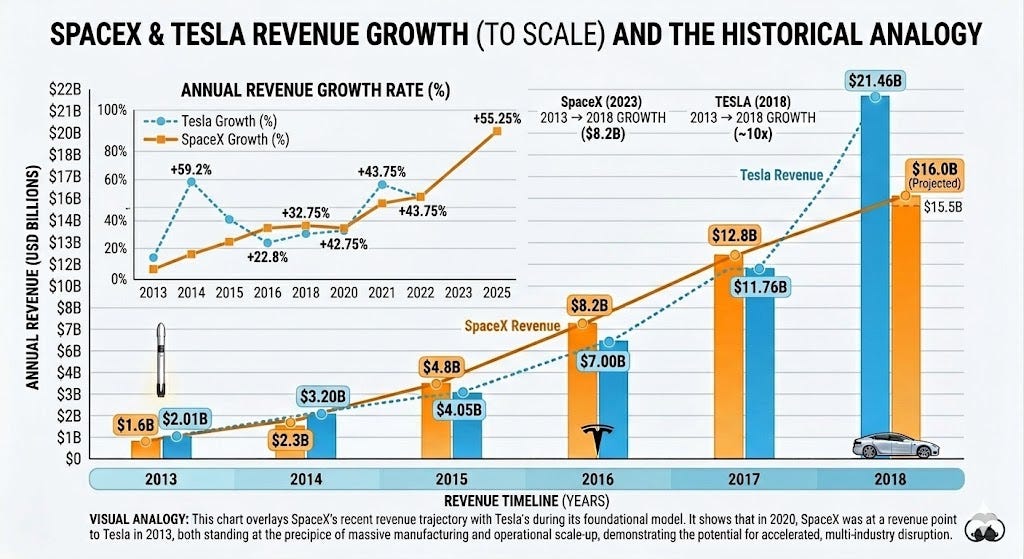
In 2020, SpaceX was only pulling in $1.6 billion in revenue. By 2025, revenue had jumped to over $15.5 billion, growing revenue by nearly 1,000% in five years. This mirrors the explosive growth trajectory seen from Tesla, that grew revenue by 1050% between 2013 and 2018. It is also significantly faster than Palantir, that grew revenue from $1.1 billion in 2020 to $3.5 billion in 2025.
By way of a roadmap, this report describes the history of the company and how it was transformed from bankruptcy into the leader in its industry. It then details the competition and addresses the Musk factor and how that should affect our view on SpaceX. We will then strip down and understand the valuation, red flags, and finally I will give overall thoughts on the company. By the end of this piece, you will have a clear understanding of SpaceX, the tailwinds and bear cases, tradeoffs and all the important information required for those considering investing in the largest private company ever.
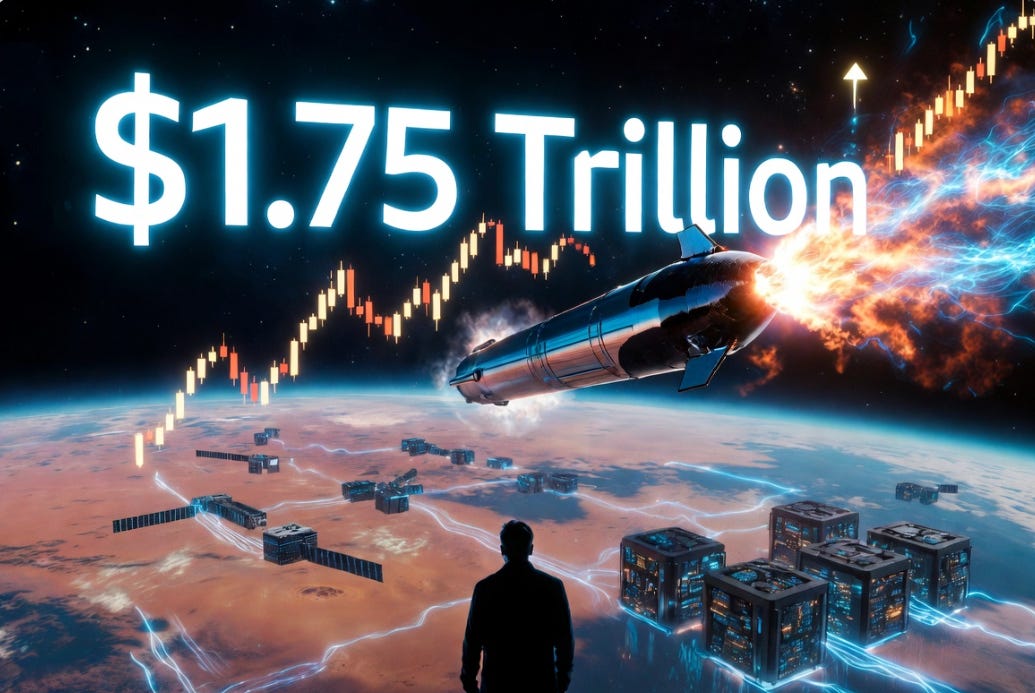
SpaceX’s current valuation of $1.75 trillion will likely immediately launch it into one of the ten biggest companies in the world, significantly larger than other Mag7 giants like Meta and Tesla. Their rapid growth and unlimited ceiling (pun intended) have caught the attention of not just investors but some of the biggest companies in the world as well. Nvidia, Google and Broadcom have all made significant investments into SpaceX. And they aren’t the only ones; just a few days ago Anthropic announced a massive partnership with SpaceX leasing the entire Colossus supercomputer for billions of dollars a year of recurring revenue1. This deal has shifted SpaceX into an AI cloud infrastructure provider.
Despite all this, critics of SpaceX are saying that the valuation is way too high. They find it impossible to believe that a company that reported a net loss in 2025 could possibly be one of the most valuable companies in the world. Starlink, SpaceX’s crown jewel and cash generating machine, generated only $11.4 billion in revenue in 2025, less than a third of the revenue of AT&T in one quarter, a company worth $175 billion, 10% of SpaceX’s estimated IPO.
The Birth of SpaceX:
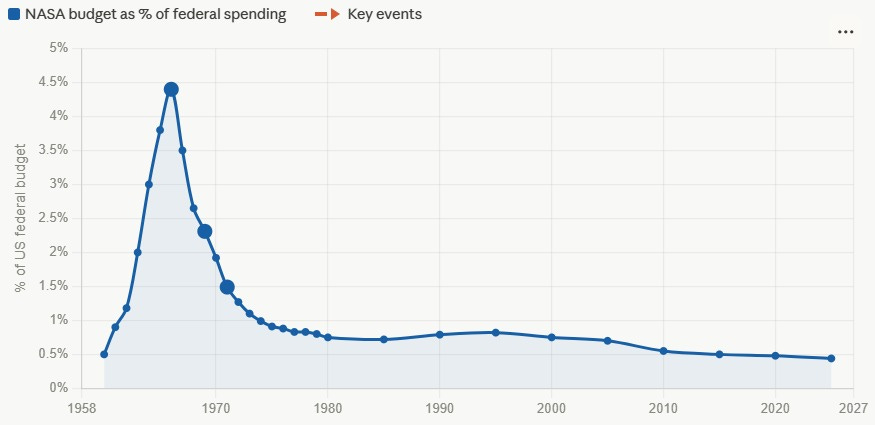
SpaceX wasn’t always a trillion-dollar company. The story truly begins in the 1960s. During the height of the cold war, the US and the USSR were fighting on almost every front. Including space. The US was spending aggressively and dedicating their best resources to the space race, allocating over 4% of the federal budget at its peak2. The race to the moon ended on July 20th, 1969, when Neil Armstrong became the first human to ever step foot on the moon. And then, for some reason, the space race seemed to end there. Instead of building on the success of landing a human on the moon, NASA stopped trying to expand their mission. US funding was slashed, with NASA’s federal allocation dropping below 1% in 1971, a number it has remained below ever since3. By 2001, the US was spending $14.25 billion less than half of the $32.34 billion 1966 budget4.
Into this vacuum stepped Elon Musk. Born in 1971, Elon Musk had grown up in the decades following humans stepping foot on the moon yet for the first three decades of his life, no human came close to that same feat. In 2001, frustrated by that lack of progress Musk decided to start looking into furthering space exploration. In 2001, he tried to buy a Russian intercontinental ballistic missile in order to use as a prototype to send to Mars. Musk couldn’t pay the price the Russians wanted, and he was famously laughed out of the room by the Russian officials. Instead, he decided to build it himself.
After the meeting, Musk decided to do the math himself. He found that when building a rocket, only 3% of rocket costs were actually the raw materials. He realized that building a rocket himself would be a fraction of the cost.
And so, in 2002 Musk spent $100 million of his own money to hire some of the most talented engineers in the world. With some of the top talent hired as the cornerstones of his organization, Musk then decided to fill out the rest of his team on a budget, calling top universities like MIT and Stanford to ask department heads for the top students5.
I think it’s important to reason from first principles rather than by analogy. You boil things down to the most fundamental truths and say, ‘What are we sure is true?’ … and then reason up from there.”
Elon Musk - Founder of SpaceX
Due to the budget constraints of SpaceX, Musk and his team decided to build everything from first principles. This approach came after they tried to buy a space radio and were quoted a price tag of $100,000. Instead, they built it themselves. The cost, $50006. They continued improvising and thinking outside the box, realizing that it would be cheaper to build the rocket vertically than horizontally. This approach would be fundamental to the way SpaceX operates until today.
In 2006, five years after meeting with the Russian space team, SpaceX launched its first rocket, the Falcon 1. Unfortunately, it failed, as did the second attempt, and the third in 2008. At that point, SpaceX was weeks away from bankruptcy and dangerously close to becoming a failed experiment.
In a final Hail Mary to save the company, in 2008, Musk and his team launched flight 4. The flight worked, and Musk and his team became the first private company to launch a rocket into orbit. A few months later, NASA signed a $1.6 billion contract, providing the capital needed in order to survive.
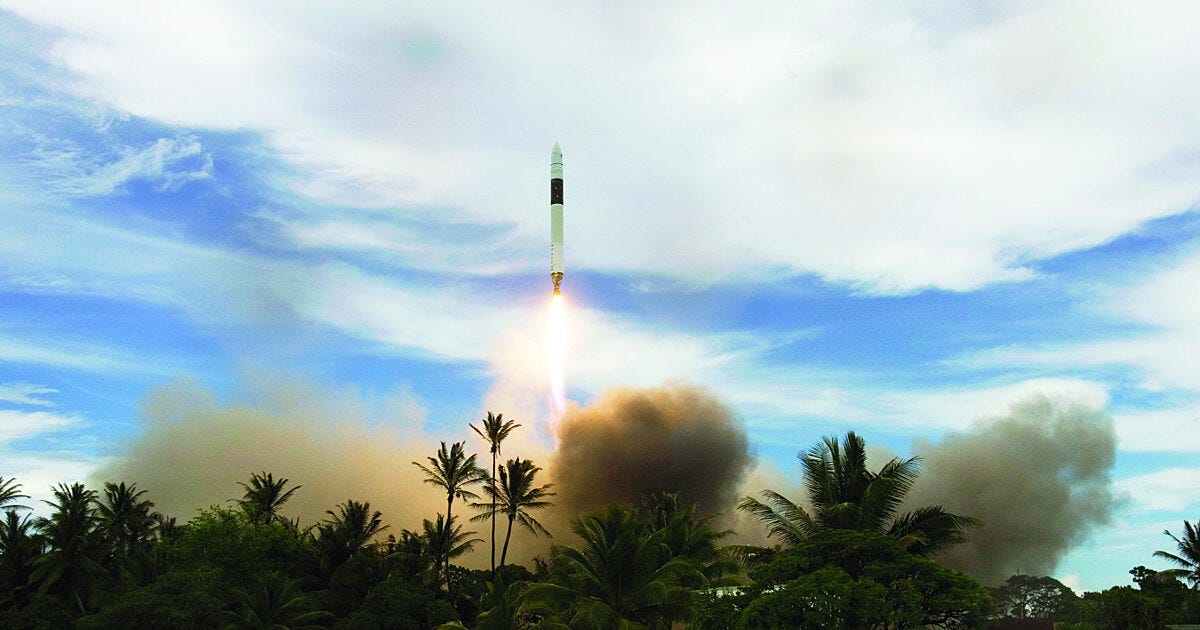
Over the next decade, SpaceX experimented, built and innovated until in 2015 they reached a major milestone, launching and landing a booster back on Earth7. This success proved that their business model worked and that rockets don’t have to be single-use. In the same year, Musk announced Starlink, what would become SpaceX’s cash generating machine years into the future. Then in 2020, they launched their first private flight bringing humans to orbit for the first time. Today, a quarter century after it was founded, SpaceX accounts for almost 90% of spacecraft launched worldwide and is likely the company pulling off the greatest modern engineering feat.
What does SpaceX do?
SpaceX is the company leading the charge to utilize space and expand human life outside of just Earth. But how exactly does that break down?
“SpaceX’s ultimate goal is to make life multi-planetary, with a focus on enabling humans to live on Mars, while revolutionizing space technology and reducing the cost of space access.”
Elon Musk at SpaceX founding, 2002.
SpaceX was originally founded by Musk in 2002 with two initial goals.
Taking humans to Mars and establishing a colony outside of Earth.
Expanding and improving space technology with the goal of simultaneously reducing space costs.
In essence, SpaceX is trying to become space infrastructure for a new space economy. And so far, they have succeeded. Investing in SpaceX is, by extension, investing in a belief that space will become more utilized tomorrow than it is today.
As mentioned previously, the vast majority of anything going into space today whether it is people, satellites, or equipment is done by SpaceX. And that’s not by chance. Rebuilding everything in house helped SpaceX not only in its early days, but it has also led to significantly cheaper costs than other competitors today.
Currently, SpaceX is split into a few different business branches.
Starlink:
Starlink is SpaceX’s giant web of thousands of satellites in space that provide internet anywhere in the world. Its users include airlines, cruise ships, and other companies and people working or living in remote places in the world that regular providers don’t cover.
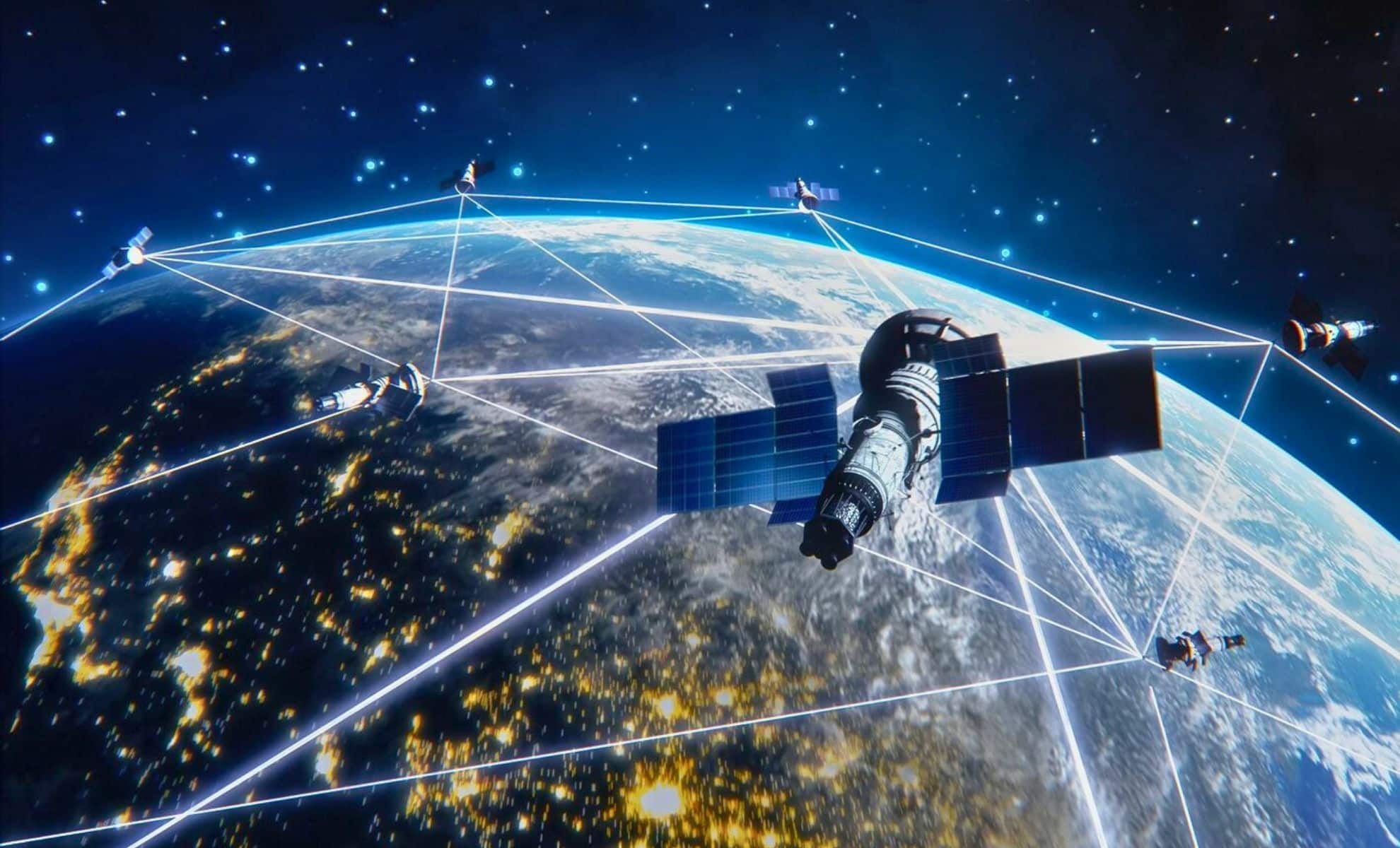
Starlink is vastly different from normal satellites which give them unique advantages that regular service providers don’t offer. Unlike regular satellites, Starlink sets up their web significantly closer to Earth, only around 550 kilometers away - or the distance from London to Paris. Traditional satellites in comparison, are set up around 35,000 kilometers away or nearly the entire circumference of the Earth. Starlink also uses a mega constellation of over 10,000 small satellites as opposed to the regular method of a few big satellites.
Starlink also connects differently than a regular service provider. Instead of hiring a technician to drill holes in your wall in order to make space for wires, all you need is a Starlink kit and you can set it up yourself. This also means that when moving, you can take your Starlink kit with you instead of having to call a technician to reinstall Wi-Fi in your new home.
Starlink isn’t perfect, while still providing fast data, speeds are traditionally slower than good service providers. In addition, heavy rain or snow can often affect Starlink reliability.
In 2025, Starlink generated approximately $11.4 billion in revenue, an increase of over 50% year-over-year8. This $11.4 billion accounted for the majority of SpaceX’s revenue and is the only current profitable part of SpaceX’s business, providing around $3 billion in free cash flow in 2025.
Commercial Launch:
The second part of their business is their commercial launch services. Essentially, SpaceX charges other companies in order to bring anything up to space. SpaceX is and will likely serve as the logistics backbone of the space economy. Anything that moves around outside of Earth, SpaceX is essentially taking a cut on. Today, the majority of what is being taken to space are satellites, however launch is also used by NASA and the Department of Defense for their own purposes.
This is a business with almost unlimited potential. With reports that anything from fiber optics to pharmaceuticals might be potentially cheaper to build in space, SpaceX has a unique opportunity to be toll booth of the entire space highway. The formula is very simple, the more things going into space, the more money SpaceX makes. For those who believe that the space infrastructure will grow, as long as SpaceX can continue to stay ahead of its competitors this business could turn profitable quickly.
Currently, despite generating $4.1 billion in revenue, an 8% growth year-over-year, launch generated a $3 billion loss in free cash flow. Notably, this was mostly due to the fact that the majority of SpaceX launches were filled with Starlink, not because the business itself wasn’t profitable.
xAI:
On February 3rd, 2026, SpaceX announced a historic deal. A purchase of xAI, Musk’s AI play which had previously bought X, the social media formerly known as Twitter. In the largest acquisition in history, Musk merged space, AI and essentially turned SpaceX into a futuristic everything project. Musk called it:
“The most ambitious, vertically integrated innovation engine on (and off) Earth, with AI, rockets, space-based internet, direct-to-mobile device communications and the world’s foremost real-time information and free speech platform”9.
xAI, the company behind Grok, is an LLM competitor to Anthropic, OpenAI and Gemini. That being said, Grok is currently “niche” with less than 1% of market share, its main users being X users. ChatGPT alone has 90x as many weekly users as Grok. xAI’s revenue is estimated at $3.8 billion, a massive 38x growth year-over-year, mostly due to the merger with X, which generates approximately $3.3 billion in revenue10. xAI standalone revenue with X is estimated at only $500 million in 2026. It is worth noting that xAI is a cash burning machine, burning through an estimated $14 billion last year more than Anthropic and OpenAI combined.
One of the main reasons for this and what causes xAI to stand apart from its competitors is its data infrastructure. Their Colossus AI supercomputer in Memphis is the largest one in the world, and it houses over 220,000 Nvidia GPUs. A few days ago, Anthropic reached a landmark deal with SpaceX (and xAI) to lease the entire Colossus data center, a deal that should give SpaceX another predictable revenue stream for years down the line11. xAI meanwhile, is moving their operations to the newer Colossus 2 facility. It is an interesting deal with a company that Musk has previously had intense ideological disputes with in the past.
xAI is essentially trying to pivot from a competitor to the big LLMs, to a company that runs the compute needed to power them. Critics will say that this is due to the massive failure of Grok, Musk fans will claim that it is another genius pivot from Musk.
Other Business Parts:
While these are the main business parts and revenue streams of SpaceX, there are additional sections of the business that are worth briefly mentioning.
Government Contracts and Starshield:
SpaceX also has a number of contracts with the US government and military. These government and military contracts are mainly with the US, although SpaceX has expanded to other government entities and allies as well. Starshield, SpaceX’s government and military program was specifically built to pair with different militaries and provides service with additional security to remote areas, something that militaries around the world use.
Starshield leverages SpaceX's Starlink technology and launch capability to support national security efforts. While Starlink is designed for consumer and commercial use, Starshield is designed for government use12
Some of the other government contracts include SpaceX’s partnership with the European Space Agency to launch European missions along with other deals with countries like Japan and South Korea. Government and military contracts are projected to bring in $7 billion in 2026 with Starshield accounting for nearly half of that amount13.
Human Launch:
While this is currently not a large part of revenue, SpaceX does make money from sending astronauts to the International Space Station.
In the future, if there is a potential colony on the moon or mars, SpaceX could hypothetically, be the toll booth for every single person leaving the planet. In addition, if space tourism ever becomes more of an option as we saw with the group of celebrities who spent 10 minutes in space in April of 2025. This is likely only relevant for the ultra-rich but could be a potential revenue stream down the line.
While it is worth mentioning, human launch will likely never be a massive part of SpaceX’s business unless there is a fully functional colony on either the Moon or Mars where millions of people are flying each way.
Competition:
It is important to note that while today, SpaceX is ahead of all competition by a significant margin, competition usually follows only once a sector has proven profitable. If revenue begins increasing exponentially, investment money will immediately flood the scene and likely begin to pose more serious threats to the moat of SpaceX. Even if one or two competitors can pose a threat to SpaceX’s prices, it could massively compress margins and erode profits.
This is already a scenario we have seen play out with another Musk company. When Tesla first produced its electric cars, criticism was extreme. They were compared to “golf cart technology” and their business model was described as “upside down”14. When Tesla became the most valuable car company in the world, dozens of other competitors began emerging. In 2020, Tesla led all companies in EV sales with 16% of global market share15. In 2025, Tesla sold only 7.8% of electric vehicles, while BYD, the Chinese competitor, sold 19% of electric vehicles16. Despite this, Tesla is still by far the most valuable automotive company, perhaps due to their shift into Robotics.
Blue Origin:
One of the other wealthiest men in the world also has his eyes set on space. Jeff Bezos, the founder of Amazon founded a competitor called Blue Origin that will likely compete with SpaceX on launch. Blue Origin was the company that launched the group of celebrities previously mentioned to space and with Bezos and Amazon as partners, they will likely be serious competitors down the line.
Additionally, Amazon just released Project Leo, Amazon’s attempt to compete with Starlink. In the long run, Starlink will likely still outperform Project Leo, but as mentioned previously, a second competitor, even one not as good, can likely hurt margins for SpaceX in the only area of their business that is currently profitable.
Rocket Lab:
The second big competitor to SpaceX is Rocket Lab, who completed 21 launches in 2025 with a 100% success rate17. SpaceX in comparison launched 170 rockets last year18.
SpaceX is once again ahead of its competition, but Rocket Lab is quickly making significant strides to catch up. They are currently valued at $60 billion and just released an extremely impressive Q1 quarterly report in which the stock jumped 34% and crossed $100 for the first time. In the earnings report, they announced deals with Anduril, and the US space force, deals that would likely traditionally go to SpaceX.
Other Potential Competitors:
There are dozens of other potential competitors that are worth mentioning briefly.
In the US, the United Launch Alliance, a joint venture between Lockheed Martin and Boeing is currently the primary alternative for national security launches. In Europe, Arianespace is leading Europe’s commercial launch market. While not currently competitive on pricing, as relationships continue straining between the US and Europe, Europe may prefer to have their own self-reliant option. In Asia, the Indian Space Research Organization is currently the leader in cost-efficient launches. Finally, China has a number of competitors who often get massive government funding.
Currently, SpaceX is ahead of all other competition however if space does turn into a profitable field, the money pouring in will likely cause some serious competitors to rise up. Think about within a few years of ChatGPT’s launch, once it began to prove valuable, hundreds of other companies immediately entered the AI space and OpenAI had seen serious pressure from other competitors.
The Musk Factor
Elon Musk is one of the most controversial figures in our time. He is undoubtedly one of the greatest entrepreneurs of all time. While most people would consider leading a single company to a billion-dollar valuation a huge success, Musk is the only person in history to lead two companies to trillion-dollar valuations. Musk began by founding Zip2, which was later sold for $300 million before he founded X.com. After its merger with Confinity Musk transitioned into being the CEO of PayPal. Incredibly, he has founded SpaceX while managing Tesla all while also founding xAI, Neuralink, the Boring company and more. Musk is without a doubt one of the most impressive builders of our generation.
Due to Musk’s success, he has attracted something of a cult following. There are those who believe that all that Musk touches turns to gold, which is unfortunately far from the truth. He does have an incredible ability to pivot and sell his new vision, even if it seriously contradicts his previous statements.
Musk has had a full steam ahead approach in every company he has run, which while often leading to massive success, has also caused some huge failures. It has also caused him to often make promises and share visions that often totally miss the mark. Whether this is deliberately misleading shareholders in an attempt to raise capital or Musk trying to set goals that push the companies he operates forward, often Musk sets targets which are late or even wholly missed.
Musk has also been open about this strategy, in a 2024 interview with Dwarkesh Patel, he announced that:
I generally try to aim for a deadline that I at least think is at the 50th percentile... which means that it'll be late half the time. If you pick a timeline where you are certain you're going to make it, then you're definitely being too slow." - Elon Musk
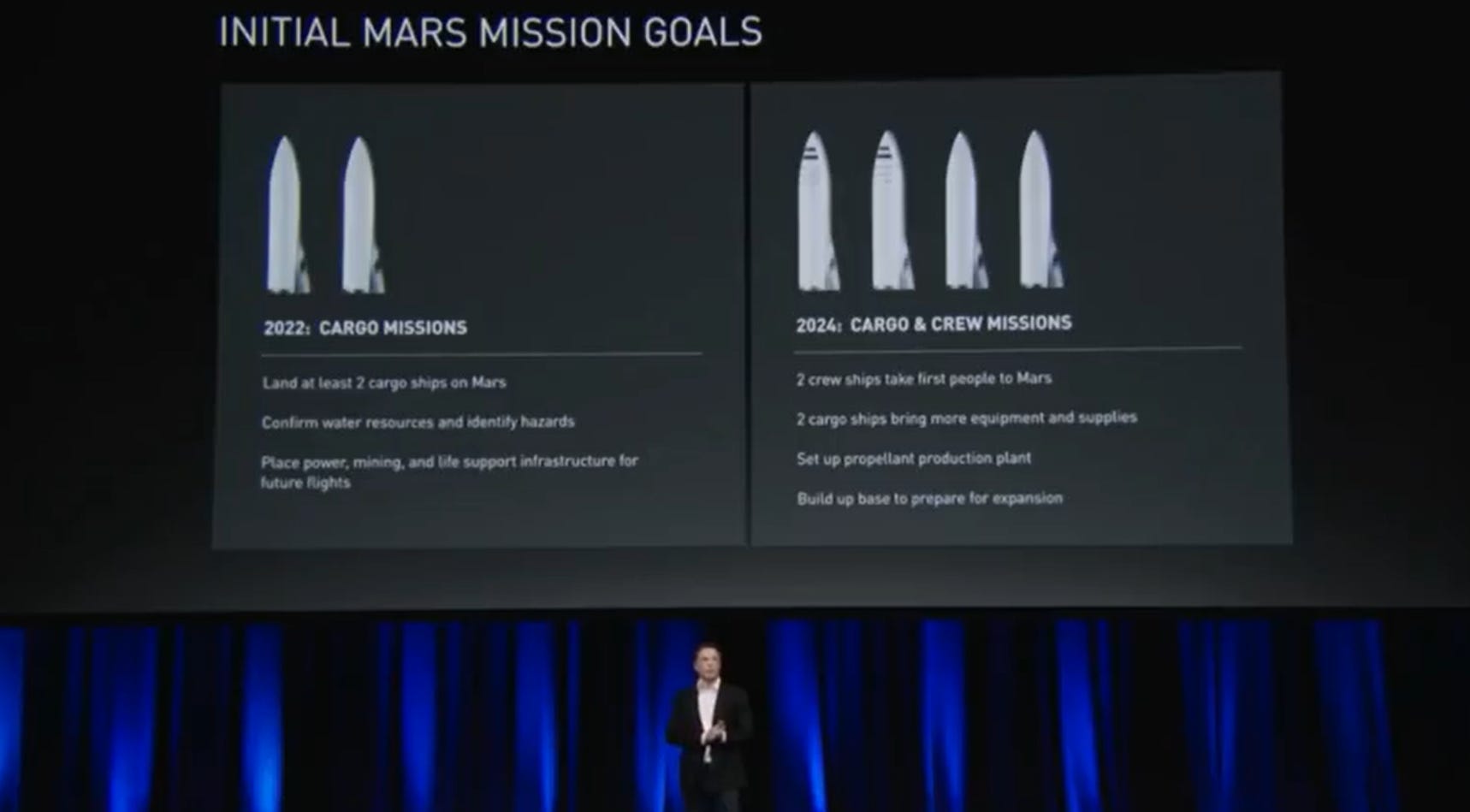
This sounds great in practice, but it also misleads shareholders. In 2017, Musk announced that within five years he would have two cargo missions on the moon and by 2024, two crewed missions would step foot on Mars for the first time. A decade later, neither of these has happened.
Another example is only a few weeks after SpaceX purchased xAI for a record setting $250 billion, Musk put out the following tweet.
This tweet led many SpaceX investors to ask the following question, if xAI was not built correctly the first time around, why did we just perform the most expensive acquisition in history? Perhaps this is just an attempt by Musk to save one of his less successful companies using SpaceX. In addition, while the idea of merging space and AI sounds attractive, xAI is currently burning through approximately the total revenue that SpaceX generates. Why would SpaceX pay $250 billion instead of focusing on space expansion.
Interestingly enough, the top comment under the above tweet with almost 2,000 likes was praising Musk for being willing to admit his error calling him a founder “in a league of his own.”
But it doesn’t end there, Musk has also fully reneged on many of his statements. He previously put out the below tweet, which of course will be proven false in the next few months when SpaceX goes public.
Recently, Musk has walked back one of the main promises of SpaceX announcing that SpaceX would be shifting focus to the moon instead of Mars.
The comments on this post were far from positive. Many people saw this as Musk betraying SpaceX’s original goals and directly misleading shareholders. “Have you considered launching yourself into the sun instead?” One user responded with over 2,200 likes.
While this might sound very negative, it is also important to look at the flip side of investing in a Musk led company. Despite Musk routinely not being able to deliver on all of his promises with Tesla, Tesla is still $100 billion more valuable than the fifty next car companies in the world19. xAI shareholders, who were holding a company losing a billion dollars a month with no plans of going public, now have transformed their shares into much more valuable SpaceX stock. No matter what, Musk seems to always find a way to deliver returns to his shareholders.
Musk may not have delivered on all of his promises, but he has delivered massive returns to his shareholders. The market when dealing with Musk chooses to price the long-term vision, not today’s delivery.
For those who do choose to invest in Musk, it is important to note that you are investing in today’s vision of what Musk believes. As his vision for the company shifts, Musk will decide to do whatever he believes is in its (or perhaps his) best interest. And unlike Tesla, who went public at only a $1.7 billion valuation, SpaceX will likely be targeting a valuation of $1.75 trillion or 1000x the size. This is a company priced to perfection, not a Musk startup with huge asymmetric upside. The caveat, if there is anything we should learn from previous Musk companies, it is that investing in his ideas usually returns huge returns.
The last hypothetical that is important to consider, is that while it is impossible to not factor Musk into the equation, if he was not at the head of a company, what would the valuation be? Musk companies have returned incredible increases in share prices, but they haven’t generated cash flow in the same way that the other massive tech companies have. At some point the chicken will come home to roost if decades pass without generating actual cash flow for the benefit of the shareholders. It is important to be wary of having a belief in a man more than in the company itself.
In the next section, we will be going over the valuation and will be diving into SpaceX’s reported $28.5 trillion TAM.
After that, we will talk about the IPO and potential red flags surrounding investing into SpaceX including the lock up period and more.